Asbestos Safety
Welcome to Asbestos Awareness Training!
Please enter your details to begin the course.
Introduction to Asbestos Safety
Welcome to the Asbestos Awareness E-Learning module. Asbestos exposure is a serious concern, especially in the fire and flood restoration industry, and is the leading cause of work-related death claims in BC.
This module provides essential information based on the BCCSA guide and WorkSafeBC's Safe Work Practices for Handling Asbestos manual.
Important Update!
As of January 1, 2024, specific Asbestos Certification & Licensing requirements are in effect for workers and employers involved in asbestos abatement work in BC.
- Anyone performing asbestos abatement work needs a valid certificate.
- Restoration workers doing abatement/removal likely need Level 2 Asbestos Safety certification.
- Workers transporting/disposing asbestos need Level 1 Foundational Awareness certification.
- Employers performing abatement, surveys, transport, or disposal must be licensed.
- Check the BCCSA and WorkSafeBC websites for full details and training.
Why is this important for Restoration?
- Asbestos Containing Materials (ACM) can be disturbed during a fire or flood loss itself, or by initial mitigation attempts.
- Workers (adjusters, inspectors, technicians, project managers) can be exposed before formal restoration begins.
- Employers MUST protect workers even in emergency scenarios.
- Hazardous materials, including asbestos, are a major focus of WorkSafeBC inspections.
- Safe work protocols are crucial during initial site entry, surveying, and contents handling.
What is Asbestos?
Asbestos refers to a group of naturally occurring fibrous minerals valued historically for properties like insulation, strength, and resistance to heat and chemicals.
Asbestos-Containing Material (ACM) is any material with 0.5% or more asbestos (by specific analytical methods). Exception: Vermiculite insulation is considered ACM if *any* asbestos is present, even if it is less than 0.5%.
Where is Asbestos Found?
Primarily in buildings constructed before the early 1990s, but can be in newer buildings (up to 2018) in sealants, adhesives, mastics, caulking, and cement products.
Common Locations (Pre-1990s):
- Insulation (attic, wall, pipe, boiler)
- Ceiling tiles, floor tiles (vinyl), sheet flooring
- Roofing shingles, felt, siding
- Drywall joint compound, plaster
- Textured coatings (popcorn ceilings)
- Pipe coatings, duct tape
- Cement pipes and boards
Potential in Newer Buildings:
- Sealants & Adhesives
- Mastics & Caulking
- Cement products
- Imported materials
Types of Asbestos
- Serpentine (Chrysotile/White Asbestos): Most common (>95%), flexible, curved fibers.
- Amphibole (Amosite/Brown Asbestos, etc.): Straight, stiff fibers. Found in coatings, insulation, cement. Rarer in BC, sometimes contaminates vermiculite.
Friability: A Key Hazard Factor
Friability is the ability of a material to be crumbled or powdered by hand pressure. Friable ACM is much more hazardous because the fibers can easily become airborne (aerosolized).
Health Hazards & Exposure Limits
Asbestos exposure is extremely dangerous, primarily through inhalation of airborne fibers.
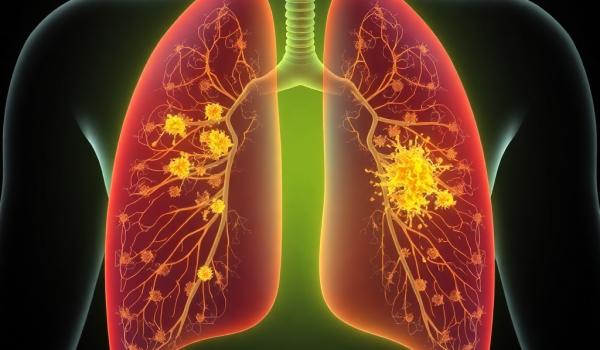
How Asbestos Harms the Lungs:
- Fine fibers penetrate deep into the lungs.
- They lodge in air sacs and tissues.
- The body cannot easily break them down or remove them.
- This leads to inflammation and scarring over time.
Major Health Risks (Chronic Exposure):
- Asbestosis : Scarring of lung tissue, reducing elasticity and making breathing difficult.
- Lung Cancer : Significantly increased risk, especially for smokers exposed to asbestos.
- Mesothelioma : A rare but aggressive cancer affecting the lining of the lungs (pleura) or abdomen (peritoneum). Strongly linked to asbestos exposure.
Exposure Limits (OHSR Section 5.48)
The WorkSafeBC Occupational Exposure Limit (OEL) for all forms of asbestos is 0.1 fibres per cubic centimeter (fibres/cc) of air, averaged over an 8-hour workday.
The ALARA Principle:
Because asbestos is a carcinogen, exposure must be kept As Low As Reasonably Achievable (ALARA) , even below the OEL. The OEL is a legal maximum, not a "safe" level.
Risk Identification, Assessment & Control
Before any work begins on a site where ACM might be present, employers MUST identify, assess, and control the risks.
Key Steps Before Work:
- Conduct a Hazardous Materials Survey by a Qualified Person .
- If ACM is suspected or identified, develop an Asbestos Inventory .
- Conduct a detailed Asbestos Risk Assessment (by Qualified Person).
- Classify the planned work as Low, Moderate, or High risk (by Qualified Person).
- Develop site-specific Safe Work Procedures and an Exposure Control Plan (ECP) .
- Appoint a trained Asbestos ECP Administrator.
- Inform workers of all hazards present (asbestos, mould, lead, etc.).
Work Risk Classification (OHSR 6.1):
Low Risk
Work near ACM where the material is NOT cut, sanded, drilled, broken, ground, fragmented, or disturbed in a way that releases fibers.
Example: Visual inspection near intact ACM, moving properly sealed waste bags.
Moderate Risk
Work (other than high-risk) involving cutting, sanding, drilling, breaking, grinding, fragmenting, or disturbing ACM such that fibers may be released.
Examples: Small cuts into drywall, removing vinyl tiles, glove bag removal of pipe insulation, cleanup of small breaches.
High Risk
Work involving ACM where a high level of control is necessary to prevent exposure.
Examples: Removing large amounts of friable ACM (like spray insulation or vermiculite), major demolition involving ACM, total loss clean-up where ACM is widespread and disturbed.
Notice of Project (NOP)
An NOP must be submitted to WorkSafeBC at least 48 hours before starting work involving:
- Moderate or High risk asbestos activities.
- Alteration, repair, dismantling, or demolition of buildings where ACM was processed, manufactured, or stored.
In emergencies, work can start immediately, but the NOP must be filed ASAP, and reasonable effort made to contact WorkSafeBC.
Hazard Controls
Because asbestos is a carcinogen and the ALARA principle applies, controls must follow the Hierarchy of Controls , prioritizing the most effective methods.
- Elimination (Physically remove the hazard - e.g., full abatement)
- Substitution (Replace the hazard - Not applicable for existing asbestos)
- Engineering Controls (Isolate workers - e.g., enclosures, ventilation, wet methods)
- Administrative Controls (Change how work is done - e.g., procedures, training, signage, scheduling)
- Personal Protective Equipment (PPE) (Protect the worker - e.g., respirators, coveralls)
Controls often work best in combination. PPE is the last line of defense.
Control Methods by Risk Level
Site-specific procedures are required, developed by a Qualified Person. The following are general examples (refer to WorkSafeBC's Safe Work Practices for Handling Asbestos for details).
| Feature | Low Risk | Moderate Risk | High Risk |
|---|---|---|---|
| Dust Suppression | Not required | Water misting, HEPA vacuum | Water misting, HEPA vacuum |
| Work Area Isolation | Not required | Drop sheets, barriers (tape), warning signs | Full enclosure (poly), negative air unit, warning signs |
| Decontamination | Not required | Wash station, wet wipe procedures | 3-stage decon facility (clean room, shower, transfer room) |
| Respirator (Minimum) | Not required | Half-facepiece w/ P100 filters | Full-facepiece w/ P100 filters (or PAPR/SAR depending on concentration) |
| Coveralls | Not required | Disposable w/ head covering | Disposable w/ head covering (no street clothes underneath for some high-risk tasks) |
| Gloves/Footwear | Not required | Disposable gloves, laceless boots/booties | Disposable gloves, laceless boots |
Note: This table provides general examples. Specific PPE and controls depend on the detailed risk assessment and anticipated airborne fiber concentrations.
PPE & Hygiene
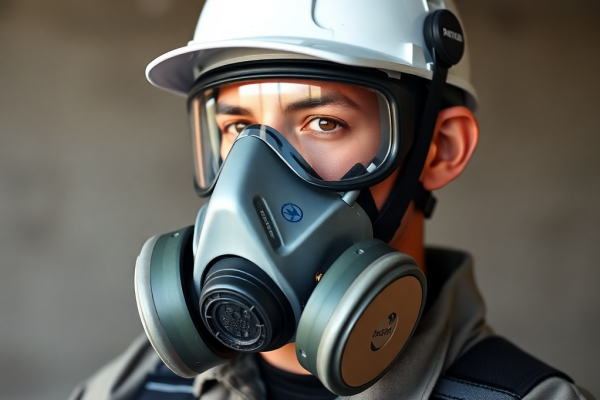
Respiratory Protection
Choosing the right respirator is critical and depends on the expected concentration of asbestos fibers in the air (determined by risk assessment).
- Use at least P100 filters (or N100/R100) for air-purifying respirators.
- Disposable/single-use dust masks are NOT acceptable for asbestos work.
- Higher concentrations require full-facepiece respirators, Powered Air-Purifying Respirators (PAPRs), or Supplied-Air Respirators (SARs).
- Fit Testing is mandatory for all tight-fitting respirators (half/full facepiece).
- Workers must be clean-shaven where the respirator seals.
- Perform a Seal Check each time the respirator is put on.
- Inspect respirators before each use. Clean and store properly according to the respirator program.
- Replace filters when breathing resistance increases or per manufacturer/program schedule.
Other PPE
- Disposable Coveralls: Required when working with ACM or entering contaminated areas. Usually Type 5/6 or better. Hoods are necessary.
- Gloves: Disposable gloves suitable for the task.
- Footwear: Laceless rubber boots or disposable booties over work boots. Must be easily cleanable or disposable.
- Eye Protection: Safety glasses or goggles, especially if not using a full-facepiece respirator.
- Other PPE as needed: Hard hats, high-visibility vests, hearing protection based on site hazards.
If reusable PPE (like boots) cannot be fully decontaminated, it must be disposed of as asbestos waste.
Hygiene & Decontamination
Strict hygiene is essential to prevent taking asbestos fibers home or ingesting them.
- NO eating, drinking, smoking, or chewing gum in the work area.
- Avoid touching face while working.
- Wash hands and face thoroughly after work and before eating/drinking.
- Follow specific decontamination procedures based on risk level (wet wiping, HEPA vacuuming, designated wash stations, multi-stage showers for high-risk).
- Remove contaminated coveralls carefully, rolling them inward, and place in designated, labelled asbestos waste bags.
- Shower after high-risk work, often while still wearing the respirator initially.
Education, Monitoring & Record Keeping
Education & Training
Employers MUST ensure workers are adequately trained on asbestos hazards and site-specific controls.
- Mandatory Asbestos Certification training (Level 1, 2, 3, S) is required for specific roles (abatement, transport, disposal, supervision, surveying) as of Jan 1, 2024.
- General and site-specific training must cover:
- Recognizing potential ACM
- Health hazards
- Safe work procedures & ECP details
- Engineering controls & PPE use (including fit testing & seal checks)
- Decontamination procedures
- Waste handling and disposal
- Emergency procedures
- How to report hazards or exposures
- Training records (attendance, dates, material) must be documented and retained.
- Workers must be trained to STOP WORK if asbestos is unexpectedly encountered until a Qualified Person assesses the situation.
Monitoring the Work Environment
Air sampling is required to assess worker exposure and ensure controls are effective.
- Required for Moderate and High risk work.
- Includes personal sampling (on workers), area sampling, and clean room sampling (daily for high-risk).
- Air Clearance Sampling is required before dismantling high-risk containments (and sometimes moderate-risk) to ensure the area is safe.
- Must be conducted by a Qualified Person, typically from an independent third-party lab/consultant.
Health Monitoring
- Regular medical exams (including lung function tests, chest X-rays) may be required for workers with regular asbestos exposure (e.g., abatement workers).
- Workers must report any potential exposure symptoms to their employer and WorkSafeBC.
Record Keeping
Employers must maintain records for specific durations:
- At least 10 years: Risk assessments, site inspections, air monitoring results, incident reports, NOPs, training records.
- Until ACM removed: Current asbestos inventory (by employer and owner).
- Until property transfer: Records of changes to the inventory.
Roles & Responsibilities
Everyone on a worksite has health and safety responsibilities, especially regarding hazardous materials like asbestos. These are summaries; refer to the WCA and OHSR for full details.
Prime Contractor (Multiple-Employer Workplaces)
Usually the directing contractor (or owner if no agreement). Responsible for coordinating H&S among all employers/workers and ensuring overall site compliance.
Owner
Responsible for maintaining safe premises and providing known hazard information (including hazardous material surveys) to the employer/prime contractor.
Employer
- Identify/assess risks, ensure surveys are done.
- Provide training, resources (PPE, equipment), and develop ECPs/procedures.
- Ensure supervisors/workers are trained and follow rules.
- Conduct annual ECP reviews.
- Maintain records (training, fit tests, inspections, monitoring).
- Investigate incidents, report to WorkSafeBC.
- Coordinate with other employers/clients.
- Ensure subcontractors are informed and follow procedures.
Supervisor
- Verify worker training and instruct on safe procedures/ECP.
- Ensure proper controls and PPE are used (including fit testing).
- Direct work safely, inspect workplace regularly.
- Correct unsafe acts/conditions immediately.
- Ensure resources are available.
- Coordinate with others.
Worker
- Attend training.
- Use PPE correctly.
- Follow procedures.
- Report hazards, incidents, symptoms, or impairments.
- Know how to refuse unsafe work.
- Make safety suggestions.
Joint Occupational Health & Safety Committee (JOHSC)
Consults on ECP effectiveness, investigates incidents, provides recommendations, assists in annual reviews.
Knowledge Check
Test your understanding of the key concepts covered in this module.